Repeated blocked drains are rarely just bad luck. When the same drain keeps slowing down, backing up, or blocking again after a short time, there is usually a deeper reason behind it. In some cases, the problem is a stubborn build-up that never cleared fully. In others, the blockage keeps returning because the drain has damage, root ingress, or a hidden defect that catches waste again and again.
This is why repeat drainage problems should not be ignored. A one-off blockage can be frustrating. However, repeated blocked drains often waste time, increase mess, and create a higher risk of overflow or property damage. The longer the cause stays hidden, the more disruption it can create.
In this guide, we explain why some blocked drains keep coming back, the signs that point to a deeper issue, and when professional help is the best next step.
Why Repeated Blocked Drains Should Not Be Ignored
A drain that blocks once may be a simple local issue. A drain that blocks again and again usually points to something more persistent. The blockage may sit deeper in the system. The drain line may have rough surfaces, root intrusion, or poor flow. Waste can then catch in the same spot every time.
This matters because repeat problems often get worse over time. At first, you may only notice slow drainage or a light smell. Later, you may start dealing with standing water, outside overflow, or more than one fixture showing symptoms. That is why it makes sense to act early and arrange a drain unblocking service before the issue causes more disruption.
The Most Common Causes of Repeated Blocked Drains
Repeated blocked drains can happen for several reasons. Some are caused by what goes into the system. Others come from defects within the drain itself.
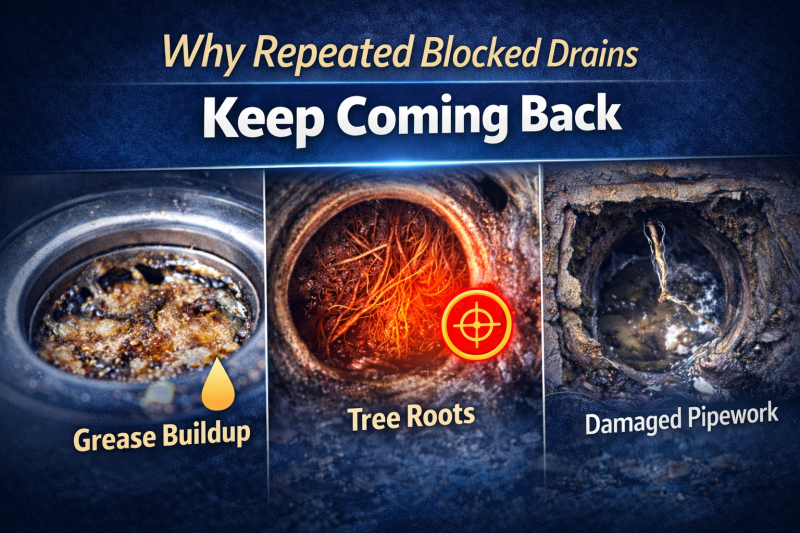
Grease, fat, soap, and debris build-up
Kitchen waste is one of the most common causes of recurring blockages. Fat, grease, food particles, and soap residue can all cling to the inside of the pipe. Over time, this narrows the flow path and makes it easier for fresh debris to stick.
A small opening may remain after a temporary clear, but the drain still has a thick coating inside. Because of that, the blockage returns faster than expected.
Wipes, sanitary products, and foreign objects
Many repeated blocked drains happen because unsuitable items enter the system. Even products labelled as flushable can catch inside the drain and combine with grease or waste. Sanitary products, wipes, paper towels, and small foreign objects are all common causes.
Once material starts catching in one area, the drain can block repeatedly until the full obstruction is cleared.
Tree roots entering the drain
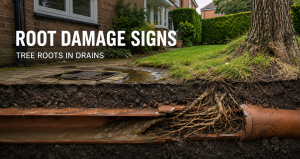
Tree roots are another common reason for repeated blocked drains, especially in older systems. Roots search for moisture and can enter through small cracks or weak joints. Once inside, they trap waste and restrict the flow of water.
This type of blockage often returns because the root mass remains in place unless the real cause is identified and treated properly.
Damaged, collapsed, or misaligned pipework
A damaged drain can create the perfect point for recurring blockages. Cracks, displaced joints, rough edges, and slight collapses all interrupt smooth flow. Waste catches more easily, and the same section blocks again and again.
In this type of case, clearing the obstruction alone may not solve the problem for long. The drain may also need further investigation or drain repair options.
Poor flow or incorrect pipe gradient
Some recurring drainage issues happen because water does not move through the line properly. If the fall is poor, waste can settle instead of flowing away. This can create repeated blockages over time, especially when combined with debris build-up.
The Warning Signs of Repeated Blocked Drains
Repeated blocked drains often give clear warning signs before they become severe. Spotting those signs early can help you act before the situation gets worse.
You may notice:
- water draining slowly again soon after a previous blockage
- the same sink, toilet, shower, or gully causing problems more than once
- gurgling sounds from nearby outlets
- bad smells that keep returning
- water rising higher than normal before draining away
- outside drains filling up or overflowing during normal use
- more than one fixture showing symptoms at the same time
When these warning signs appear more than once, the issue often needs more than a quick clean or temporary fix.
Why Quick DIY Fixes Often Do Not Last
Many people try to deal with repeated blocked drains using plungers, drain cleaners, rods, or hot water. Sometimes that helps with a minor local build-up. However, repeat problems often sit deeper in the line or have a structural cause that DIY methods cannot fix.
A temporary clear may open a narrow gap through the blockage. Water then drains for a short while, so the problem seems solved. Yet the remaining debris, grease, roots, or pipe defect is still there. It only takes a little time for waste to collect again.
In some cases, repeated DIY attempts can also delay the real diagnosis. That is why ongoing problems often need proper help with blocked drains rather than another short-term workaround.
When Repeated Blocked Drains Point to a Deeper Defect
Repeated blocked drains become more concerning when the symptoms spread or return quickly. If the same issue comes back within days or weeks, there may be an underlying defect in the system. This is especially true when more than one fixture is affected, foul smells keep returning, or the outside drain starts overflowing.
A deeper problem may include:
- root ingress
- a cracked or collapsed section of drain
- displaced joints
- a section with poor fall
- scale or rough surfaces inside older pipework
- a long-term obstruction that never cleared properly
These are the situations where a CCTV drain survey becomes especially useful. It allows the drainage system to be inspected properly so the real cause can be identified.
When to Arrange a CCTV Drain Survey
A CCTV drain survey is not necessary for every simple blockage. However, it is often the right next step when repeated blocked drains keep coming back and no one can confirm why.
You should consider a CCTV drain survey when:
- the blockage returns after clearing
- the same drain causes repeat problems
- several fixtures show linked symptoms
- bad smells keep coming back
- roots or damage may be involved
- the drain overflows again after previous work
- you want to know whether repairs may be needed
A survey can show whether the issue is just a blockage, or whether the system has a structural fault that needs a longer-term fix.
When Repeated Blocked Drains Become Urgent
Not every repeat blockage is an emergency. Even so, repeated blocked drains can become urgent when they start causing contamination, overflow, or serious disruption.
You should treat the problem more seriously when:
- sewage backs up into the property
- an outside drain overflows with foul water
- the only toilet becomes unusable
- water floods inside during normal use
- several fixtures stop working together
In those situations, prompt emergency drainage help may be the safest option.
You can also review sewer flooding guidance from a trusted external source to understand the wider risks linked to wastewater and contamination.
How to Reduce the Risk of Repeat Blockages
You cannot prevent every drainage problem, but you can reduce the risk. Good habits make a real difference, especially in kitchens and bathrooms.
It helps to:
- avoid pouring fat, oil, or grease down sinks
- keep wipes, sanitary products, and paper towels out of toilets
- clear hair and debris from shower wastes regularly
- pay attention to slow drainage before it worsens
- act early when smells or gurgling begin
- arrange proper investigation if the same blockage keeps returning
The key point is simple. Repeated blocked drains rarely improve for long without the right fix. Early action often saves time, money, and disruption later.
Final Thoughts
Repeated blocked drains usually mean there is more going on than a one-off blockage. The cause may be a stubborn build-up, unsuitable materials in the system, tree roots, pipe damage, or another hidden defect. If the same problem keeps returning, it makes sense to look beyond temporary fixes.
A proper drain unblocking service can deal with the immediate issue. Where the problem is recurring, a CCTV drain survey can help confirm the true cause and show whether further work is needed. Acting early is often the best way to avoid bigger drainage problems later on.
FAQs
What causes repeated blocked drains?
Repeated blocked drains are often caused by grease build-up, wipes, foreign objects, tree roots, damaged pipework, or a blockage that never cleared fully.
Can repeated blocked drains mean there is damage underground?
Yes. Repeat blockages can point to cracks, displaced joints, root ingress, or collapsed sections of drain that catch waste and restrict flow.
Will plunging a drain solve repeated blocked drains?
It may help for a short time, but it often does not solve the real cause if the blockage is deeper in the system or linked to damage.
When should I arrange a CCTV drain survey?
A CCTV drain survey is useful when the same drain keeps blocking, bad smells keep returning, or there are signs of root ingress or pipe damage.
Are repeated blocked drains ever an emergency?
They can become urgent if they lead to sewage backup, foul water overflow, loss of the only toilet, or flooding inside the property.