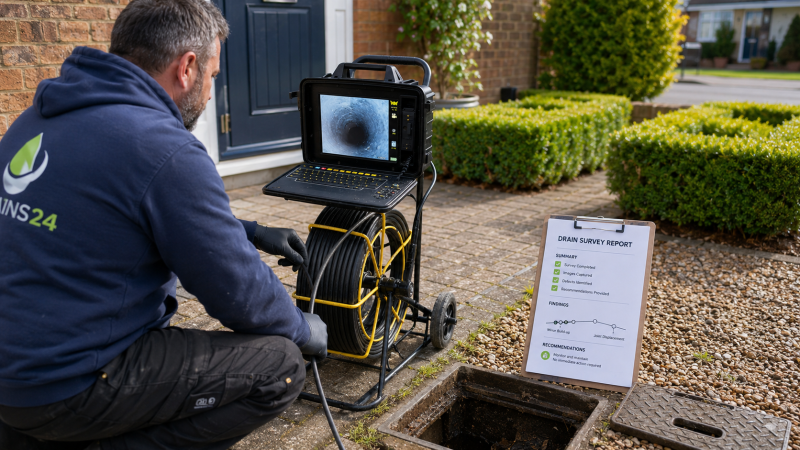
A drain survey report explained properly should do one simple thing: turn underground drainage findings into something clear enough to act on. Most people do not need to know every technical detail of a drainage camera inspection. What they do need to know is whether the drains are in good condition, whether there are any faults, how serious those faults are, and what should happen next.
That is why the report matters. A CCTV survey on its own gives footage of the drainage system. The report turns that footage into useful information. It helps show whether the issue is a simple blockage, root ingress, a damaged section of pipe, poor flow, or a more serious structural problem. It can also help buyers, homeowners, landlords, and property managers make better decisions before agreeing repairs or moving ahead with a purchase.
This guide explains what a drain survey report tells you, the most important findings to look for, and how to understand what the report really means in practical terms.
Why a Drain Survey Report Matters
A drain problem is often hidden below ground, so it is easy to guess wrong from the surface. Slow drainage, bad smells, or repeat blockages can point to several different causes. Without inspection, one issue can look very similar to another.
That is where a CCTV drain survey becomes useful. The report that follows matters because it gives structure to the findings. Instead of relying on a vague summary, you get a clearer picture of what the drainage system is doing, where the problem sits, and whether the issue looks minor, repeatable, or more serious.
What a Drain Survey Report Usually Includes
A drain survey report usually brings together the key findings from the camera inspection and presents them in a more usable format.
That often includes:
- the location of the inspected drains
- the condition of the pipework
- any blockages or restrictions seen
- evidence of root ingress
- cracks, fractures, or joint defects
- poor flow or standing water inside the line
- displaced sections or collapse
- notes on severity and likely next steps
The exact format can vary, but the core purpose stays the same. A drain survey report explained properly should tell you what was found, where it was found, and why it matters.
What a Drain Survey Report Can Reveal
A good report can reveal much more than whether a drain is simply blocked.
Blockages and restrictions
A report may show whether the problem is caused by debris, grease buildup, silt, wipes, or another restriction. This matters because some blockages are one-off issues, while others keep returning because something in the pipe keeps catching waste.
Root ingress
Tree roots inside the drain are a common cause of recurring drainage problems. A report can show whether roots have entered the system, how much of the line they affect, and whether the pipe may also need repair after clearance.
Cracks and fractures
A drain survey report can reveal cracks or fractures in the pipe wall. These may be small now, but they can still affect the condition of the system and allow future drainage problems to develop.
Joint defects and displacement
Open joints, poor connections, or shifted sections of pipe can all interfere with flow and create repeat trouble. A report helps show whether the line is still aligned properly or whether waste may be catching at the same point.
Poor flow or standing water
Sometimes the issue is not a break or blockage but a poor gradient or a section where water is not clearing properly. A report may show that water sits in part of the drain longer than it should, which can point to an underlying design or condition issue.
Collapse or severe damage
In more serious cases, the report may show a collapsed or heavily damaged section that needs drain repair options rather than another routine clear.
What the Severity of the Findings Tells You
One of the most important parts of a report is not just the defect itself, but how serious it appears to be.
A minor issue may mean:
- routine maintenance is enough
- the drain is still functioning reasonably well
- the problem should be monitored but is not urgent
A more significant issue may mean:
- the fault is already affecting flow
- the same blockage is likely to return
- roots or defects are worsening
- the drain may need repair rather than repeated clearing
That is why reading a drainage report properly is about more than spotting a defect name. The more useful question is: does this finding point to a maintenance issue, a recurring issue, or a structural issue?
What a Drain Survey Report Tells You About Repairs
A good report often helps answer whether the drain needs no action, maintenance, clearance, or repair.
It may suggest that the line needs:
- a proper clear
- root removal
- a localised patch repair
- drain lining
- excavation and replacement
- further monitoring if the issue is minor for now
This is one reason a report is so helpful before agreeing work. It gives a more evidence-based reason for the recommended next step.
What a Drain Survey Report Tells Homebuyers
For buyers, a drain survey report is often less about daily maintenance and more about risk. It can help show whether the property has hidden drainage faults that may become your problem after purchase.
A report can be especially useful if it shows:
- older drains with structural wear
- root ingress from nearby trees
- previous repairs of uncertain quality
- collapse, cracking, or poor alignment
- issues likely to need work after completion
That is why a drain survey report explained for buyers should focus on what the findings mean for the condition of the property, not just the technical wording.
What a Drain Survey Report Tells Homeowners or Landlords
For homeowners and landlords, the report often helps clarify why the same drainage issue keeps coming back. A repeat blockage may turn out to be a symptom of roots, a broken joint, or a badly performing section of line.
That can help answer:
- whether the issue is likely to repeat
- whether the drain is damaged
- whether a simple clear is enough
- whether repairs should now be considered
- whether the problem is local or part of a wider run
This makes the report useful not just as a diagnosis tool, but as a decision tool.
What to Look For in a Drain Survey Report
If you are reading a report, focus on the points that affect action.
The most important questions are:
- what exactly was found
- where in the system it was found
- whether the fault affects flow
- whether the issue is likely to return
- whether the drain needs repair or just maintenance
- whether urgent action is needed or not
That matters more than trying to decode every technical phrase in isolation.
Why a Report Is More Useful Than Footage Alone
Raw CCTV footage can show that something is wrong, but it does not always explain it clearly. A proper report helps translate the footage into conclusions that are easier to understand and easier to act on.
That is especially useful when:
- you are buying a house
- you are comparing repair options
- the same drainage problem keeps returning
- you need evidence before agreeing costs
- you want to understand whether the line is in good condition overall
Footage shows the problem. The report explains what the problem means.
When a Drain Survey Report Leads to More Work
Not every report leads to repair work. Some simply confirm that the system is in better condition than expected. Others show minor issues that can wait.
More follow-up work is usually more likely when the report shows:
- recurring blockage points
- root ingress
- pipe cracking
- displaced joints
- poor flow in a section of line
- significant structural damage
- collapse or near-collapse
In those cases, the report becomes the starting point for deciding whether help with blocked drains, root removal from drains, or drain repair options make most sense.
Final Thoughts
A drain survey report explained properly should help you answer three things: what was found, how serious it is, and what should happen next. That is what turns a camera inspection into something useful.
The value of the report is not just in listing faults. It is in helping you decide whether the drain needs no action, maintenance, more investigation, or repair. In many cases, that clarity is the most useful part of the whole survey.
FAQs
What does a drain survey report include?
A drain survey report usually includes the condition of the pipework, the location of any faults, notes on blockages or root ingress, and recommended next steps.
Can a drain survey report show if the drain is damaged?
Yes. It can reveal cracks, displaced joints, root ingress, poor flow, collapse, and other structural defects in the drainage system.
Is a drain survey report useful for homebuyers?
Yes. It can help show whether a property has hidden drainage issues before purchase and whether repairs may be needed later.
Does every drain survey report mean repairs are needed?
No. Some reports only show minor issues or routine maintenance needs. Others may confirm the drains are in reasonable condition.
What should I look for in a drain survey report?
Focus on what was found, where it is, whether it affects flow, whether it is likely to return, and whether the report points to maintenance, clearance, or repair.