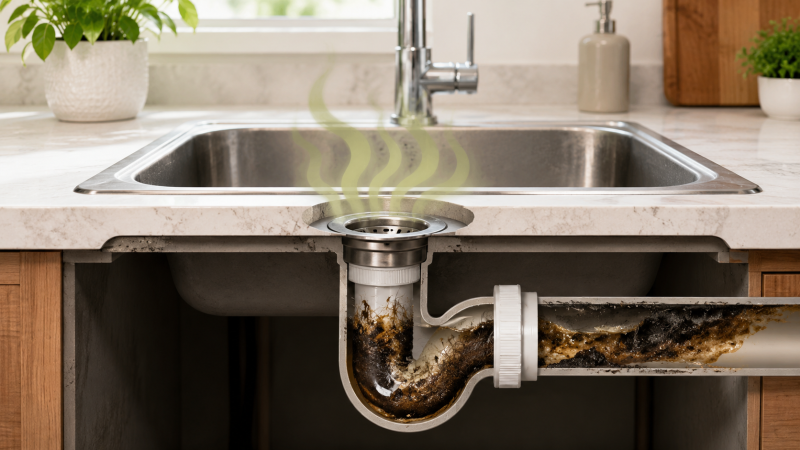
If you are asking why does my drain smell, the answer usually comes down to one of a few common causes. In some cases, the smell comes from trapped debris or buildup close to the outlet. In others, it points to a deeper drainage problem such as a blockage, poor flow, damaged pipework, or foul water sitting where it should not.
That is why drain smells should not always be dismissed as a minor nuisance. A one-off smell may be easy to deal with. A drain that smells bad every week, or one that starts smelling worse over time, often means something in the system is not working as it should.
This guide explains the most common reasons a drain smells, how to tell whether the issue is local or deeper in the system, and when it may be time to arrange help with blocked drains.
Why Does My Drain Smell in the First Place
A drain smells when waste, foul water, trapped debris, or sewer gases are allowed to sit or move in a way they should not. In a healthy drainage system, water carries waste away and traps help stop bad odours from coming back into the property.
When something interrupts that process, smells start to appear. That can happen because the drain is partially blocked, because buildup is sitting in the waste pipe, because water is not flowing through the system properly, or because there is a fault deeper in the line.
That is why the question is not only why does my drain smell. It is also whether the smell is coming from something near the outlet or from a wider drainage problem.
The Most Common Causes of a Smelly Drain
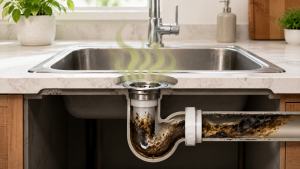
Buildup close to the plug hole or waste
This is one of the most common causes of a bad-smelling drain. Hair, soap residue, food waste, grease, and general debris can collect close to the outlet and start giving off unpleasant odours.
This type of smell often develops gradually and may be strongest when water first starts running.
A partial blockage in the waste pipe
A drain does not have to be fully blocked to smell bad. A partial blockage can slow the flow enough for waste to collect and sit inside the pipe. That trapped material often leads to a recurring smell, especially if the drain also starts running slowly.
Foul water sitting in the system
If the drainage system is not clearing properly, small amounts of dirty water may remain in the line longer than they should. Over time, that can create a stronger smell, especially where the drain has poor flow or a restriction further along the run.
A deeper blockage in the drainage line
If several fixtures start smelling bad or reacting together, the problem may sit deeper in the drainage system. In those cases, the smell is often only one symptom. Slow drainage, gurgling, and repeat backup may also appear.
Root ingress or drain damage
Sometimes a smell keeps returning because the drain has a structural problem. Cracks, displaced joints, root ingress, or poor alignment can all affect how the system flows and how waste moves through it. That can lead to odours that keep coming back even after surface cleaning.
Why Does My Drain Smell More at Certain Times
Some people notice that the smell is not constant. It may get worse in the morning, after using the sink, during wet weather, or when several fixtures have been used close together.
That pattern can be useful. If the smell worsens after water use, it often suggests buildup or poor flow in the drain. If it gets worse with other symptoms such as gurgling or slow drainage, the issue may be further into the system.
The more often the smell follows a pattern, the more likely it is that the drainage system is trying to tell you something.
Signs the Smell Is More Than a Surface Problem
A smell close to one outlet may still be a local issue. A smell that keeps returning with other drainage symptoms often points to more than that.
Warning signs include:
- slow drainage in the same sink, bath, or shower
- bad smells returning soon after cleaning
- gurgling sounds from nearby fixtures
- more than one outlet smelling bad
- outside drains smelling foul as well
- water backing up or draining poorly
- repeat blockages in the same part of the property
These are the cases where a smelly drain often links to a bigger drainage issue rather than just surface residue.
How to Fix a Smelly Drain When the Problem Is Minor
If the smell is local and the drain is still flowing reasonably well, a few simple steps may help.
Remove visible debris
Hair, food waste, and residue close to the outlet are often responsible for bad smells. Clearing what you can reach safely is usually the first sensible step.
Clean the trap or waste area
For sinks, a smell can sometimes come from trapped residue in the waste section beneath the basin. Cleaning that area can help if the problem is close to the fixture rather than deeper in the system.
Check whether the drain is also slow
A slow drain and a bad smell together often point to buildup or a partial blockage. This helps you judge whether the problem is likely to be local or deeper in the line.
These steps may help with minor smell problems, but they do not solve deeper drainage faults.
When a Smelly Drain Points to a Blockage
A bad smell often becomes more concerning when it appears with slow drainage, bubbling, or repeated backing up. That combination usually suggests the line is not clearing properly.
You are more likely to suspect a blockage when:
- the drain smells and runs slowly
- the same drain keeps smelling bad after cleaning
- nearby fixtures also react
- bad smells come back with heavy use
- outside drains also show signs of trouble
In those situations, professional help with blocked drains is often the more useful next step than repeating the same surface clean again.
When a Smelly Drain May Need a CCTV Survey
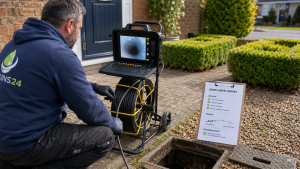
Some odours keep returning because the problem is not visible from above ground. A CCTV drain survey can become useful when:
- the same smell keeps coming back
- the drain has repeated blockages
- several fixtures are affected
- roots or damage may be involved
- the outside drainage also smells bad
- there are signs the line may need drain repair options
A survey helps show whether the smell comes from buildup alone or from a deeper structural or flow issue in the system.
Why Bad Drain Smells Should Not Be Ignored
A drain smell may start as a nuisance, but it often points to a system that is not clearing properly. The longer the cause stays in place, the more chance there is of the issue turning into a bigger blockage, repeat overflow, or more disruptive drainage fault.
That is why it helps to notice the pattern early. A one-off smell is one thing. A drain that smells bad again and again usually needs a better explanation.
Final Thoughts
If you are asking why does my drain smell, the most important thing is to look at the pattern as well as the smell itself. A local smell may come from simple buildup near the outlet. A smell that keeps returning, especially with slow drainage or other symptoms, often points to a bigger drainage issue.
The key is not just masking the odour. It is understanding why it is happening in the first place. Once that becomes clear, the right fix is usually much easier to choose.
FAQs
Why does my drain smell even when it is not blocked?
A drain can smell bad even without a full blockage if there is buildup, trapped residue, poor flow, or dirty water sitting in the waste pipe.
Can a partial blockage cause a bad drain smell?
Yes. A partial blockage often slows the flow enough for waste and debris to collect, which can create recurring odours.
Why does my kitchen sink drain smell bad?
Kitchen sinks often smell because of grease, food waste, and soap buildup sitting in the waste line or trap area.
When should I get a CCTV drain survey for a smelly drain?
A CCTV drain survey is useful when the smell keeps returning, the drain also blocks repeatedly, or there may be roots, damage, or another hidden fault in the system.
Can a bad drain smell mean the pipe is damaged?
Yes. In some cases, a recurring smell points to cracks, displaced joints, poor flow, or other structural drainage problems.