If you are wondering how to unblock a drain, the first thing to know is that some blockages are simple and local, while others sit deeper in the system and need proper equipment. A slow sink, a smelly waste pipe, or a shower that drains badly may improve with basic cleaning. However, a drain that keeps backing up, affects more than one outlet, or starts overflowing usually needs more than a quick DIY attempt.
That is where people often lose time. They try the same fix again and again, the drain seems better for a day or two, and then the problem comes straight back. In many cases, the real issue is not just the blockage itself. It is what is causing waste to catch there in the first place.
This guide explains what usually works, what often fails, and when it makes sense to stop guessing and arrange a drain unblocking service.
Why drains block in the first place
Most drains do not block without warning. The first signs are often easy to miss. Water may start draining more slowly than usual. You may hear a gurgling sound after emptying a sink. A smell may come and go near the plug hole or outside gully.
The actual cause depends on where the blockage is. In kitchens, grease, food waste, and soap residue are common problems. In bathrooms, hair, product build-up, and small debris often cause trouble. Toilets and outside drains are more likely to block because of wipes, paper build-up, foreign objects, leaves, silt, or a deeper restriction in the line.
That difference matters, because how to unblock a drain safely depends on what kind of drain you are dealing with and how serious the symptoms are.
What works when the blockage is minor
Some basic methods can help when the blockage is near the surface and the symptoms are mild.
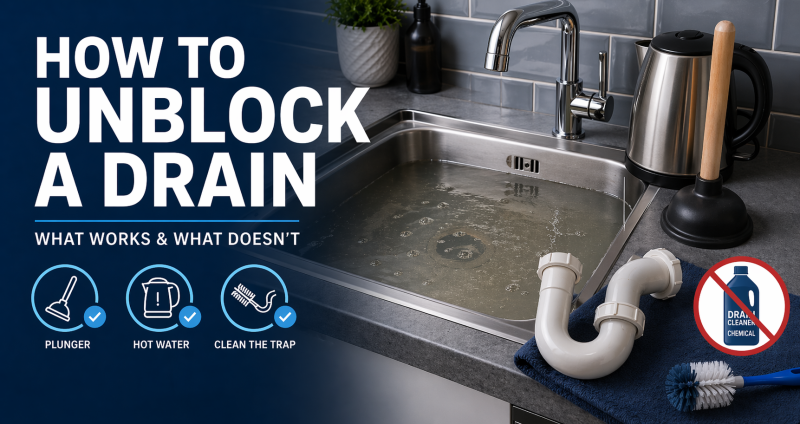
Hot water and washing-up liquid
This can help with light grease or soap build-up, especially in kitchen sinks. It is simple, low risk, and worth trying before stronger methods. It will not solve a deep blockage, but it can shift soft residue near the top of the waste pipe.
Removing visible debris by hand
If hair, food, or surface waste is sitting near the plug hole or trap, removing it may restore flow quickly. This is one of the most effective first steps for sinks, baths, and showers.
Cleaning the trap
Many minor sink blockages sit in the trap beneath the basin. If it is safe and accessible, cleaning that section can clear built-up residue and trapped debris. It is often a better option than pouring products down the drain and hoping for the best.
A plunger
A plunger can work well on local blockages where pressure is enough to shift the obstruction. It is often useful for sinks and some toilets. It works best when the blockage is not too far into the system.
These methods are most useful when:
- the blockage is recent
- only one outlet is affected
- water still drains, even if slowly
- there is no outside overflow
- there is no sewage backing up
What does not usually work for long
This is where many people waste time.
Repeated chemical drain cleaners
Chemical cleaners can sometimes cut through light build-up, but they often disappoint when the blockage is deeper or denser. They also do nothing to fix damaged pipework, root ingress, or repeat catch points inside the line.
Used too often, they can become more of a habit than a solution.
Doing the same quick fix again and again
A drain that clears briefly and then blocks again is giving you useful information. It usually means the obstruction is still there, or the drain has another fault that keeps trapping debris. Repeating the same method rarely changes that.
Guessing the cause from one symptom
A slow sink is not always just a dirty waste pipe. A bad smell is not always just trapped food. Once symptoms repeat or spread, the problem is often deeper than it first appears.
Ignoring outside warning signs
If an outside drain starts filling up, overflowing, or reacting when indoor fixtures are used, the blockage may be beyond the local waste pipe. At that stage, surface cleaning will not solve the real problem.
How to tell when the problem is deeper in the line
A simple blockage usually affects one outlet. A deeper blockage often affects more than one part of the system.
Signs the problem may be further down the line include:
- more than one sink, toilet, or shower struggling at once
- gurgling sounds from nearby fixtures
- outside gullies filling during normal use
- bad smells that keep returning
- water backing up after it seemed to clear
- repeated blockages in the same place
These are the situations where it often makes sense to move beyond DIY and arrange help with blocked drains.
If the same symptoms keep returning, a CCTV drain survey can also help confirm whether the issue is grease build-up, roots, damage, poor flow, or another hidden defect.
When a blocked drain becomes more urgent
Not every blocked drain needs an emergency callout. Some can wait for a routine visit if the issue is mild and isolated. The problem becomes more urgent when there is contamination, overflow, or loss of essential use.
You should act faster when:
- sewage backs up into the property
- an outside drain overflows with foul water
- the only toilet becomes unusable
- water floods inside during normal use
- several fixtures stop working together
In those cases, urgent emergency drainage help may be the right next step.
What a professional approach does differently
Professional clearing is not just about forcing water through the line. The aim is to remove the blockage properly and work out why it formed.
That matters because some drains block due to what has gone into them, while others block because the pipe has started to fail. A cracked section, a displaced joint, root intrusion, or poor fall can all create a point where waste catches again and again.
A proper visit may lead to:
- full clearing of the obstruction
- confirmation of whether the problem is local or deeper
- a camera inspection where repeat faults are suspected
- next-step advice if the drain needs drain repair options
A note on outside drains
Outside drains catch more than people realise. Leaves, moss, silt, fat, food waste, wipes, and general debris can all contribute to a blockage. When an outside gully keeps filling, the issue is often deeper than the visible opening.
This is also a good place to support the wider network. For a more local example of similar drainage issues, add a relevant supporting link here once live, such as:
- our Salisbury guide to blocked outside drains
- our Southampton post on overflowing drains
- our Bournemouth article on recurring outside drain problems
Use the most relevant published local article rather than forcing a generic local link.
Final thoughts
Learning how to unblock a drain is useful, but it only helps when the blockage is minor and close to the surface. Hot water, trap cleaning, visible debris removal, and plunging can all help in the right situation. They are not a cure for deeper restrictions, repeat blockages, or damaged drains.
The key is knowing when to stop trying quick fixes. If the drain keeps blocking, affects more than one outlet, smells bad every week, or starts overflowing, it usually makes sense to arrange a drain unblocking service and check the real cause properly.
FAQs
Can boiling water unblock a drain?
Hot water can help with light grease or soap build-up, especially in kitchen sinks. It is less effective on deeper or more stubborn blockages.
Is it safe to use chemical drain cleaner?
It can sometimes help with minor build-up, but it often fails on deeper obstructions and does not fix structural issues inside the drain.
How do I know if the blockage is deeper in the system?
If more than one outlet is affected, bad smells keep returning, or an outside drain reacts when you use indoor fixtures, the problem may be further down the line.
When should I call a professional instead of trying DIY?
It makes sense to call for help when the blockage keeps coming back, starts overflowing, causes sewage backup, or affects several fixtures at once.
When is a CCTV drain survey worth doing?
A CCTV drain survey is useful when the same blockage returns, the symptoms do not match what you can see above ground, or there may be damage, roots, or another hidden defect.