When people start looking at drain repair options, they usually want a clear answer to one question: does the drain need digging up, or can it be repaired with less disruption? The answer depends on what has failed, where the damage sits, and how much of the line is affected. Some drains can be repaired internally using no-dig methods. Others need excavation because the damage is too severe, badly positioned, or beyond the limits of a lining-based fix.
That difference matters because repair work is not one-size-fits-all. A small crack is not the same job as a collapsed section. A displaced joint is not the same as a badly broken run beneath a driveway. The best result usually comes from choosing the method that fits the fault, not just the method that sounds quickest or cheapest on paper.
This guide explains the main drain repair options, the difference between excavation and no-dig methods, and when each one tends to make sense.
Why Drain Repair Options Vary So Much
Drain damage shows up in different ways. Some faults only affect a short section of pipe. Others affect the structure of the line itself. That is why one property may only need a patch repair, while another needs excavation and full replacement of a failed section.
The method also depends on access. A defect beneath open ground is one thing. A defect under a building, a patio, or a driveway raises different practical questions. The layout of the drainage system, the material of the pipe, and the condition of the surrounding sections all help determine which repair route is sensible.
That is why a proper diagnosis often comes before any final decision on drain repair options.
What Usually Comes Before Drain Repairs
Before choosing between excavation and no-dig work, the real condition of the drain needs to be understood properly. In many cases, the first step is not the repair itself. It is confirming the exact location and type of defect.
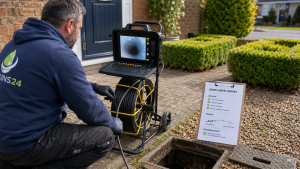
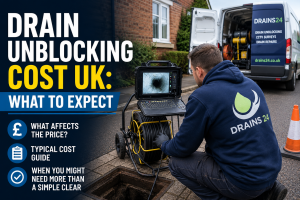
That is where a CCTV drain survey becomes useful. A survey can show whether the problem is a crack, root ingress, a displaced joint, a collapsed section, poor flow, or a blockage that has been hiding a structural issue underneath. Without that evidence, there is a risk of choosing the wrong repair method or missing the real cause entirely.
What No-Dig Drain Repair Means
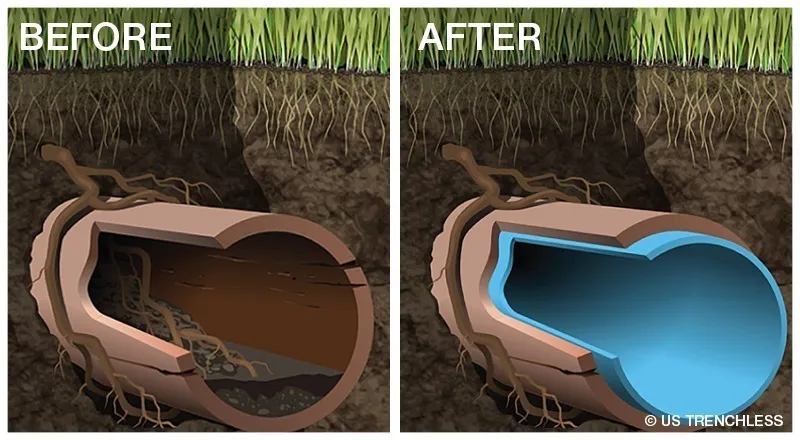
No-dig drain repair refers to methods that repair the drain internally without fully excavating the affected line. These methods are often used when the damage is limited, the pipe is still structurally suitable for internal repair, and access for lining equipment is possible.
The main advantage is lower disruption. There is often less damage to surfaces above the drain, less mess, and less reinstatement work afterwards. That makes no-dig repair especially attractive where the drain runs beneath finished areas such as driveways, landscaped spaces, or patios.
However, no-dig methods are not suitable for every job. They work best when the drain still has enough structural integrity to accept that kind of repair.
Common No-Dig Drain Repair Options
Several internal repair methods fall under the no-dig category. The right one depends on the type and extent of the damage.
Patch repair
A patch repair is used for a localised defect in a small section of drain. This is often suitable for isolated cracks, small joint failures, or a short damaged area that does not justify relining the full run.
Patch repairs are useful because they target the fault directly without repairing more of the pipe than necessary.
CIPP lining
CIPP stands for cured-in-place pipe lining. This method creates a new lining inside the existing drain. It is often used where the defect affects a longer section of pipe, or where the drain has several weaknesses that make a broader internal repair more sensible.
This is one of the best-known no-dig drain repair options because it can restore the flow path and strengthen the inside of the pipe without full excavation.
Localised internal sealing
Some repairs focus on sealing minor defects at joints or entry points. This can help in narrower cases where the problem is small and clearly defined, although suitability depends on the exact condition of the line.
When No-Dig Drain Repair Makes Sense
No-dig repair is often the better option when:
- the defect is limited rather than widespread
- the drain has enough structural shape left to accept lining
- the issue is a crack, joint failure, or small damaged section
- access for internal equipment is possible
- avoiding excavation would reduce major disruption above ground
It can be especially useful where the drain runs beneath finished surfaces or areas that would be costly to disturb. In those cases, internal repair may offer the best balance between practical access and repair outcome.
What Excavation Drain Repair Means
Excavation drain repair involves opening the ground above the damaged section so the failed pipe can be accessed directly. This is the more traditional repair method and is still necessary in some cases.
It usually becomes the right option when the drain is too badly damaged for lining, when sections have collapsed, when the pipe has lost its shape, or when the fault cannot be dealt with properly from inside the line.
Excavation is more disruptive than no-dig work, but that does not make it the wrong choice. In some cases, it is the only reliable way to remove the failed section and restore the drain properly.
When Excavation Is the Better Repair Option
Excavation is often needed when:
- the pipe has collapsed
- the damage is too severe for internal lining
- the drain has lost too much of its structural form
- there is a serious break or offset in the line
- access for internal repair is not practical
- the failed section needs full replacement
In those cases, trying to avoid excavation can become false economy. A less invasive method may sound appealing, but it will not help if the pipe is too badly damaged to support it.
Excavation vs No-Dig Drain Repair
The choice between excavation and no-dig repair usually comes down to one thing: what kind of defect are you dealing with?
No-dig methods are often better when the pipe is damaged but still structurally suitable for internal repair. Excavation is often better when the drain has failed more severely and needs direct access for replacement.
A simple way to compare them is this:
No-dig repair
- less surface disruption
- useful for cracks, joint defects, and limited structural damage
- often faster where suitable
- depends on the existing pipe being repairable from within
Excavation repair
- more disruptive above ground
- necessary for collapse, major breaks, or badly deformed pipe
- allows full access to the failed section
- often the only option where the drain cannot support lining work
Neither method is automatically better in every case. The better method is the one that actually solves the defect properly.
Why the Cheapest Repair Method Is Not Always the Right One
People often compare drain repair options by cost first. That is understandable, but it can be misleading. A cheaper repair is not good value if it is used in the wrong situation and fails to deal with the real problem.
The more useful question is whether the chosen repair matches the condition of the drain. A patch repair can be excellent value for a local defect. It is poor value if the line has wider structural failure. Excavation may cost more upfront, but it may still be the correct choice if the pipe has collapsed and cannot be lined reliably.
That is why it often makes sense to confirm the condition of the line first through a CCTV drain survey before deciding on repairs.
Signs the Drain May Need Repair, Not Just Clearing
Some drainage issues are simple blockages. Others point to damage that clearing alone will not solve. Warning signs include:
- repeated blockages in the same place
- bad smells that keep returning
- root ingress confirmed or strongly suspected
- slow flow that returns after clearing
- outside drains overflowing again and again
- evidence of pipe movement, sinking, or broken sections
- drainage problems affecting the same run repeatedly
These are the cases where help with blocked drains may deal with the immediate symptom, but the long-term solution often depends on choosing the right repair method.
How the Right Repair Method Gets Chosen
The best repair decisions usually follow a simple process:
- identify the symptoms
- inspect the line properly
- confirm the type and extent of damage
- choose the repair method that suits the defect
- avoid over-repairing or under-repairing the problem
This is one reason why generic advice on drain repairs can be misleading. The best option depends on evidence from the actual line, not just the symptom seen above ground.
Local and Network Linking Opportunity
This topic is a strong main-site guide because it supports the core drain repairs service page while giving you natural opportunities to link down into local content where relevant. That fits the campaign structure you uploaded, where each main-site post supports the relevant service page and at least one suitable local article.
Use only real local posts that genuinely relate to:
- drain repairs
- patch repair vs relining
- collapsed drains
- root ingress and repair
- CCTV diagnosis before repair
Final Thoughts
The best drain repair options depend on the condition of the pipe, not just the fact that a drain problem exists. No-dig methods can be excellent where the damage is limited and the line is still suitable for internal repair. Excavation is still the right answer where the pipe has collapsed, shifted badly, or failed too severely for lining to work.
The key is to repair the actual fault properly, not just choose the least disruptive option by default. In many cases, a CCTV drain survey is the step that makes the choice clearer. Once the defect is confirmed, the right drain repair options become much easier to judge.
FAQs
What are the main drain repair options?
The main drain repair options are no-dig methods such as patch repair and CIPP lining, or excavation where the pipe needs direct access and replacement.
Is no-dig drain repair always better?
No. It is often less disruptive, but it only works when the pipe is still suitable for internal repair. Severe damage or collapse may still need excavation.
When is excavation needed for drain repairs?
Excavation is often needed when the drain has collapsed, shifted badly, or lost too much structural form for lining to work properly.
Can a CCTV drain survey show which repair method is needed?
Yes. A CCTV drain survey can help confirm the type, location, and extent of the damage so the most suitable repair method can be chosen.
Is a patch repair cheaper than full relining or excavation?
It often is, but only when the defect is small and localised. The right repair depends on the actual condition of the drain, not just the lowest price.