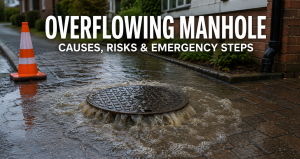
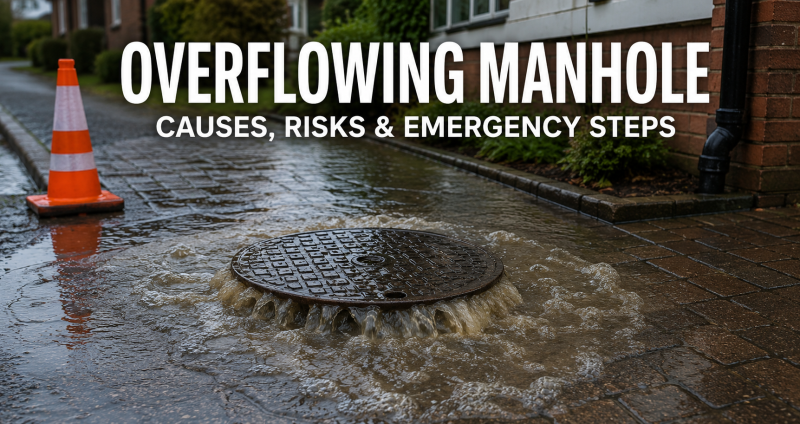
An overflowing manhole is a serious drainage problem because it usually means wastewater can no longer move through the system properly. Instead of staying below ground, foul water starts rising and spilling out at surface level. That can create contamination, bad smells, access problems, and a clear hygiene risk around the property.
This is not the kind of drainage issue to ignore and hope for the best. In many cases, an overflowing manhole points to a severe blockage, a restricted line, or a deeper fault somewhere in the drainage run. The important thing is to act quickly, reduce the immediate risk, and stop anything that could make the overflow worse.
This guide explains the most common causes of an overflowing manhole, the risks to take seriously, and the emergency steps to take straight away.
Why an Overflowing Manhole Needs Fast Action
An overflowing manhole is more than just an unpleasant outside drainage issue. Once wastewater starts coming up above ground, the drainage system is already under too much pressure. That means the problem is no longer contained below the surface.
The main concern is contamination. Foul water on paths, patios, driveways, or near entrances creates a hygiene problem straight away. The overflow can also spread further if people continue using toilets, sinks, showers, washing machines, or other connected fixtures.
That is why an overflowing manhole should be treated as an urgent drainage issue rather than a routine blockage.
The Most Common Causes of an Overflowing Manhole
Several different faults can lead to an overflowing manhole. In most cases, the immediate cause is a blockage or restriction somewhere in the drainage system.
A severe blockage in the drainage line
This is one of the most common causes. Wastewater cannot move past the blocked section, so it builds up and starts rising at the lowest or weakest point. If the blockage is far enough down the line, the manhole may be where that pressure shows first.
Wipes, debris, grease or waste build-up
Foul drains often block because unsuitable materials collect and restrict the flow. Wipes, sanitary products, paper buildup, grease, food waste, and general debris can all contribute. Over time, the restriction becomes severe enough that the system starts backing up.
Tree roots or structural defects
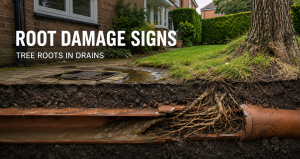
Tree roots inside the drain can catch waste and narrow the flow path. Cracks, displaced joints, and damaged sections of pipe can do the same. In these cases, the overflow may keep coming back unless the deeper issue is identified and repaired properly.
Heavy system overload
During periods of intense rainfall, some drainage systems come under extra pressure. If the line already has a restriction, that extra volume can be enough to trigger an overflowing manhole where the system was already close to failure.
The Risks of an Overflowing Manhole
An overflowing manhole carries obvious practical problems, but it also comes with wider risks that should not be ignored.
Hygiene and contamination risk
This is the main issue. Wastewater at surface level creates a direct contamination problem. The area should be treated carefully, especially where people, pets, or frequent access routes are involved.
Property access and usability problems
An overflowing manhole can quickly make paths, patios, driveways, or shared outside areas difficult to use safely. Even when the overflow is localised, it can still affect how the property functions.
Pressure elsewhere in the system
A manhole overflow often tells you the problem is not just at that point. The wider drainage system may be under pressure too. If water use continues, other outlets may start reacting as well.
Repeat overflow if the cause is not fixed
A quick clear may solve the immediate symptom, but an overflowing manhole often returns if the deeper fault remains in place. That is why urgent relief and proper diagnosis often need to work together.
The First Signs of an Overflowing Manhole Problem
Sometimes the manhole only becomes obvious once the overflow starts. In other cases, the system gives warnings first.
Common signs include:
- bad smells outside near the cover
- water sitting unusually high in the chamber
- toilets, sinks, or showers reacting together
- gurgling sounds from indoor fixtures
- outside drains filling up during normal use
- repeat slow drainage before the overflow appears
These signs often suggest the line is already struggling before the manhole actually overflows.
What to Do Immediately
If you are dealing with an overflowing manhole, take these steps straight away.
Stop using water where possible
This is the most important first step. Do not flush toilets, run taps, use showers, or start appliances that discharge into the same drainage system. Extra water can quickly make the overflow worse.
Keep people and pets away from the area
Limit access to the affected area until the issue has been assessed and controlled. This helps reduce the contamination risk and stops foul water being spread further.
Check whether indoor drainage is also reacting
If toilets, sinks, or showers are also showing symptoms, the issue is likely to be deeper in the line rather than just local to the chamber.
Note what is happening
Make a quick note of:
- whether the overflow is foul water
- whether the chamber is full or actively spilling
- whether indoor fixtures are also affected
- whether this has happened before
- whether rain may have made the issue worse
This helps when arranging emergency drainage help.
What Not to Do
People often make the situation worse by trying the wrong quick fix.
Do not keep flushing to see if it drops
If the system is already backing up at the chamber, continued flushing adds more pressure to the same blocked line.
Do not assume it is only surface water
An overflowing manhole may look like dirty rainwater at first, but if the drainage system is involved, the issue should be treated cautiously until confirmed.
Do not ignore repeated overflow
If this has happened before, there may be a recurring blockage, root ingress, or a structural defect that needs proper follow-up after the emergency is controlled.
How to Tell If the Problem Is Deeper in the System
An overflowing manhole often points to a wider drainage issue rather than one isolated chamber fault.
Signs the problem may be deeper include:
- more than one fixture reacting indoors
- repeated overflow after earlier clearing
- bad smells and slow drains together
- nearby outside drains backing up at the same time
- a known history of blocked drains in the same area
These are the cases where help with blocked drains may need to go beyond a quick local response.
When to Call for Emergency Help
It is usually time to call for urgent help as soon as the manhole is overflowing with wastewater or the problem is affecting normal drainage use at the property.
You should act quickly when:
- foul water is overflowing from the chamber
- the overflow is spreading across access areas
- indoor fixtures are also backing up
- the problem is getting worse fast
- strong smells and contamination are present
- the issue has happened before and returned
In these situations, emergency drainage help is usually the right next step.
Why a CCTV Drain Survey May Be Needed Afterwards
Once the immediate overflow has been controlled, it often makes sense to understand why it happened. A one-off blockage is one thing. A repeat overflow linked to roots, damage, poor flow, or a deeper structural issue is another.
That is where a CCTV drain survey becomes useful. It can help show whether the overflow came from a severe blockage alone or whether the line also needs drain repair options to stop the same issue returning.
Why Early Action Helps
The longer an overflowing manhole is left untreated, the more chance there is of foul water spreading, access becoming more difficult, and the wider drainage system reacting as well.
Early action can help:
- reduce the contamination risk
- limit further overflow
- prevent added pressure elsewhere in the system
- restore safer use of the area sooner
- move more quickly from symptom to real cause
Final Thoughts
An overflowing manhole should always be treated seriously because it means the drainage system is no longer moving wastewater away safely below ground. The right first steps are clear: stop using water where possible, keep people away from the affected area, note the pattern of the problem, and get urgent help if foul water is actively overflowing.
Once the immediate issue is controlled, the next step is to find out why it happened. In many cases, that means looking beyond the overflow itself and checking whether the drainage line has a deeper blockage or a structural fault that needs more than a one-off clear.
FAQs
What causes an overflowing manhole?
Common causes include a severe blockage in the drainage line, wipes or debris buildup, root ingress, structural defects, or a restricted system under heavy load.
Is an overflowing manhole an emergency?
Yes, it often is. If foul water is rising above ground, the issue should usually be treated as urgent because of the contamination and drainage risk.
Should I keep using water if the manhole is overflowing?
No. Continued water use can add pressure to the blocked system and make the overflow worse.
Can an overflowing manhole mean the drain is damaged?
Yes. In some cases, repeat or severe overflow points to roots, cracks, displaced joints, or other defects in the drainage line.
Should I get a CCTV drain survey after a manhole overflow?
In many cases, yes. A CCTV drain survey can help confirm whether the overflow was caused by a one-off blockage or a deeper structural issue.