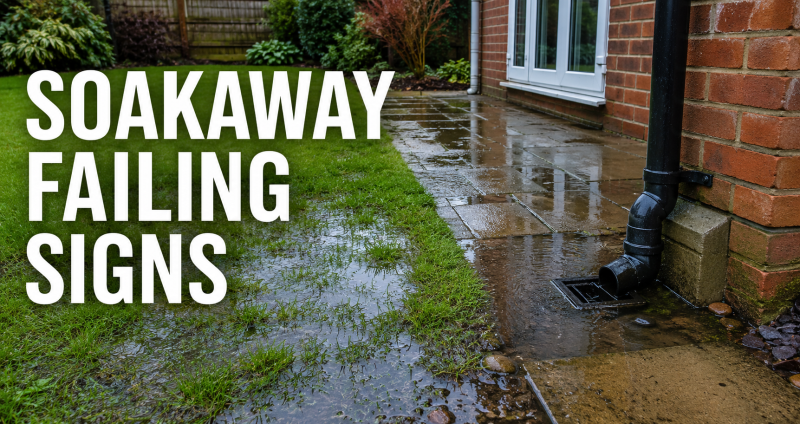
Soakaway failing signs often show up above ground before anyone realises there is a problem below. A garden may stay wet for too long after rain. Water may collect near a downpipe, patio, or driveway. The same patch of ground may keep flooding every time the weather turns bad. At first, these can seem like minor annoyances. Over time, they usually become harder to ignore.
That is because a soakaway should deal with surface water quietly in the background. When it works properly, rainwater drains away without much fuss. When it starts struggling, the symptoms usually repeat. The same puddles come back. The same ground stays saturated. The same area becomes messy every time heavy rain arrives.
This guide explains the most common soakaway failing signs, what causes them, and what to do when surface water drainage is no longer working as it should.
Why Soakaway Failing Signs Matter
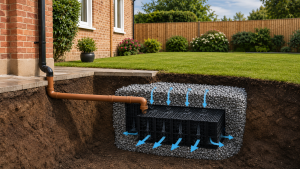
A soakaway is there to help surface water drain safely into the ground. When it stops coping properly, rainwater starts building up around the property instead of draining away. That can affect how outdoor areas look, feel, and function.
The problem is not always dramatic at first. A little standing water after very heavy rain may not mean much on its own. The warning sign is the pattern. If the same area floods again and again, or the ground stays wet much longer than it should, the drainage system may be under strain.
That is why it helps to spot soakaway failing signs early rather than wait for the next period of bad weather to confirm the same problem again.
The Most Common Soakaway Failing Signs
Standing water that lingers after rain
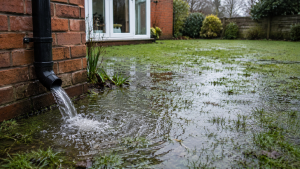
This is one of the clearest soakaway failing signs. If puddles remain long after rainfall has stopped, the system may not be dispersing water properly. This is especially relevant if the same patch of ground or paved area keeps holding water after every heavy shower.
Soggy ground that never seems to dry out
A lawn or border can stay damp for a while after rain, but it should not remain saturated for days on end in normal conditions. If the same ground keeps feeling soft, wet, or boggy, the soakaway may no longer be coping with the amount of water reaching it.
Water collecting near downpipes or drainage outlets
When a soakaway works properly, surface water should move away from the property without repeatedly pooling near the discharge point. If water keeps gathering near downpipes, gullies, or channel outlets, it may be a sign that the soakaway is overloaded, restricted, or no longer draining efficiently.
Repeat flooding in the same area
This is another strong sign. A one-off flood after unusually severe weather is one thing. The same area flooding after ordinary heavy rain is different. When the same part of the garden, patio, or driveway keeps taking on water, the system may need attention.
Surface water spreading across paths or patios
If water starts moving across areas that should normally drain or dry out quickly, the soakaway may be struggling to deal with runoff properly. This often shows up on hard surfaces first because the water has nowhere else to go.
Water sitting close to the property
Surface water that collects near walls, entrances, or the base of the property should not be ignored. Even when the cause is not the soakaway alone, it is a sign that the wider surface water drainage setup may not be working as it should.
How a Failing Soakaway Differs From a One-Off Drainage Issue
Not every puddle means the soakaway has failed. Ground conditions, rainfall intensity, and local surface levels can all affect how water behaves after a storm.
The difference is repetition. A one-off issue may clear and not return for months. A failing soakaway usually follows a pattern:
- the same area floods repeatedly
- the same ground stays saturated
- the same runoff points overflow or back up
- the problem appears after ordinary heavy rain, not just extreme weather
That repeat pattern is what makes the warning signs more meaningful.
What Usually Causes a Soakaway to Fail
Several things can reduce how well a soakaway performs. In some cases, the problem is a restriction in how water reaches or enters the system. In others, the issue is the soakaway itself or the ground around it.
Common causes include:
- silt or debris building up in the drainage route
- too much water being directed into the same system
- poor permeability in the surrounding ground
- age-related wear
- an undersized soakaway
- changes to paving, landscaping, or runoff levels
- a wider surface water drainage issue putting pressure on the same area
That is why a soakaway problem is not always just a soakaway problem. Sometimes the whole surface water setup needs looking at.
When Soakaway Failing Signs Point to a Bigger Drainage Problem
Some warning signs suggest the issue may go beyond one underground feature.
You may be dealing with a wider surface water problem when:
- several areas of the property are holding water
- runoff seems poorly directed across hard surfaces
- downpipes and channels regularly struggle together
- puddling has worsened after changes to the property layout
- the same flooding pattern affects both soft and hard ground
In these cases, it often makes sense to look at broader surface water drainage help rather than assume the soakaway alone is at fault.
What to Do If You Notice Soakaway Failing Signs
The first step is to pay attention to the pattern, not just one wet day. Look at where the water collects, how long it stays, and whether the same part of the property is affected each time.
It also helps to notice:
- whether the issue starts near a downpipe or outlet
- whether the ground stays wet between periods of rain
- whether the flooding affects access routes or the property itself
- whether the problem has worsened over time
If the same signs keep returning, it usually makes sense to stop waiting for the next storm and start looking at practical soakaway solutions.
When Professional Help Makes Sense
Professional help is usually worth considering when the same soakaway failing signs keep coming back or the surface water problem starts affecting how the property functions.
That includes cases where:
- flooding happens after normal heavy rain
- the same area stays boggy for too long
- surface water begins affecting paths, patios, or entrances
- earlier clearing or maintenance has not helped
- the cause is not obvious from the surface
At that stage, a proper drainage assessment is often more useful than another temporary workaround.
Why Early Action Helps
Many surface water issues start small and become normalised. People get used to one wet corner in the garden or a patch of standing water near the patio. The trouble is that repeat waterlogging often points to a system that is no longer performing properly.
Early action can help:
- reduce repeat flooding
- restore better use of outdoor spaces
- stop the same wet areas from getting worse
- identify whether the soakaway is the real cause
- prevent the same issue returning every rainy period
The earlier the pattern is checked, the easier it usually is to plan the right fix.
Final Thoughts
The clearest soakaway failing signs are usually not dramatic at first. They show up as the same patch of standing water, the same soggy ground, and the same repeat flooding after rain. That pattern matters more than one isolated puddle.
If the same outdoor area keeps flooding or staying wet longer than it should, the soakaway or the wider surface water drainage setup may no longer be coping properly. The right next step is to stop treating it as normal and start looking at what the system is doing wrong.
FAQs
What are the signs of a failing soakaway?
Common signs include standing water after rain, soggy ground that does not dry properly, flooding in the same area, and water collecting near drainage outlets.
Can a failing soakaway cause garden flooding?
Yes. If the soakaway cannot disperse water properly, surface water may start building up around the garden or nearby outdoor areas.
Does a puddle always mean the soakaway has failed?
No. A one-off puddle after extreme rain does not always mean failure. Repeat flooding in the same area is a stronger warning sign.
Why does water keep pooling near my downpipe?
That can happen when the soakaway is overloaded, restricted, or no longer dispersing water properly into the surrounding ground.
What should I do if I notice soakaway failing signs?
Watch for repeat patterns, note where the water collects, and get the drainage checked if the same problem keeps returning.