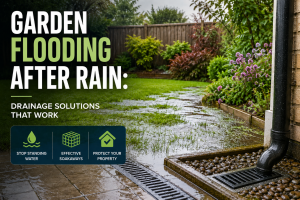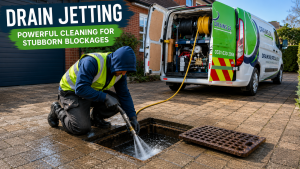
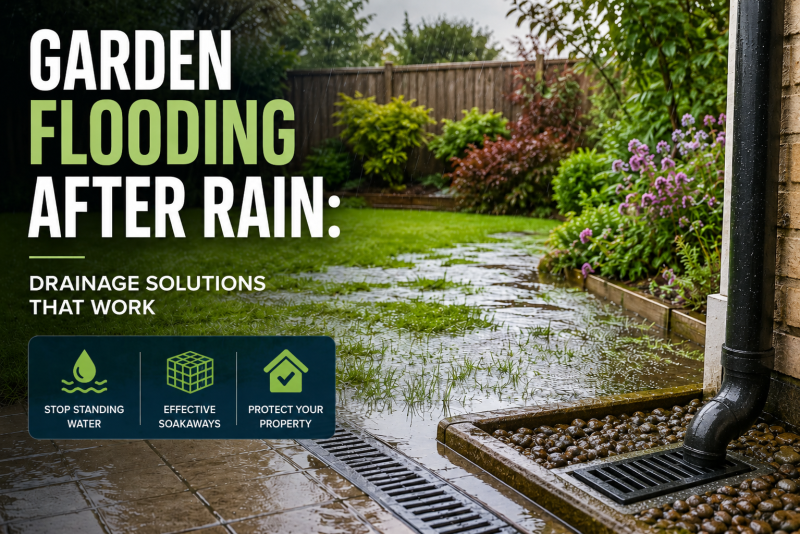
If you are dealing with garden flooding after rain, the real problem is usually not the rain itself. It is the fact that the water has nowhere effective to go. A healthy drainage setup should allow surface water to move away and disperse gradually. When the ground stays waterlogged, puddles keep coming back, or the same part of the garden floods after every heavy shower, that usually means the drainage is no longer coping properly.
This is why garden flooding is rarely just a one-off annoyance. It often points to poor surface water drainage, compacted ground, runoff collecting in the wrong area, or a soakaway system that is blocked, undersized, or not working as it should. The good news is that many of these problems can be improved once the real cause becomes clear.
This guide explains the common causes of garden flooding after rain, what drainage solutions actually work, and when it may be time to look at proper soakaway solutions.
Why Garden Flooding After Rain Happens
Most gardens can cope with normal rainfall if the water has a route to drain away or soak naturally into the ground. Flooding starts when the volume of water is greater than the ground or drainage setup can handle.
That often happens because:
- the soil drains poorly
- the ground is compacted
- runoff from roofs or paving is collecting in one place
- the garden sits at a low point
- the surface water system is not coping
- the soakaway is failing or overloaded
That is why garden flooding after rain is usually a drainage problem rather than just a weather problem.
The Most Common Causes of Garden Flooding After Rain
Poor soil drainage
Some soil types absorb water more slowly than others. If the ground holds water instead of dispersing it, the garden may stay wet long after rain has stopped.
Compacted ground
Compacted ground makes it harder for water to soak down naturally. This is common in gardens that have had heavy use, past building work, or long-term pressure on the same areas.
Surface runoff collecting in one place
Water running off roofs, patios, paths, or driveways often ends up at the same low point in the garden. If too much runoff reaches one area, flooding becomes more likely.
A failing or undersized soakaway
A soakaway is meant to take surface water and release it gradually into the ground. If it is blocked, too small, or no longer dispersing properly, the surrounding garden may start flooding after rain.
Poor falls or drainage layout
Sometimes the issue is not the ground alone. It is the way water is being directed across the property. If the layout pushes runoff into the garden without a proper drainage route, the same flooded area can keep returning.
Signs the Garden Has a Drainage Problem Rather Than a One-Off Wet Spell
Not every puddle means the garden has a real drainage problem. The stronger warning sign is repetition.
You are more likely to be dealing with a bigger issue when:
- the same area floods after most heavy rain
- the ground stays soggy for days
- water sits near the house or patio
- lawns become boggy and soft underfoot
- puddles form in the same low spots
- the issue seems to be getting worse over time
That repeat pattern is usually what separates a simple wet patch from a real surface water drainage problem.
What Garden Flooding After Rain Can Lead To
Flooding in the garden is not always just cosmetic. If the same problem keeps returning, it can start affecting how the outside space functions.
This may lead to:
- lawns staying unusable for long periods
- muddy or slippery access routes
- water collecting near walls or entrances
- planting beds becoming oversaturated
- repeat complaints about one badly affected area
- more pressure on the wider surface water drainage setup
That is why it helps to tackle garden flooding after rain before the issue becomes part of the normal routine every wet season.
Drainage Solutions That Often Work
The right fix depends on the cause, but some solutions are more effective than others once the problem has been properly identified.
Improve the route surface water takes
If runoff is collecting in the wrong part of the garden, redirecting water more effectively can make a big difference. This may involve changing how water leaves hard surfaces or how it reaches the drainage point.
Address soakaway problems
If the garden flooding links to a failing soakaway, the issue may need proper soakaway solutions rather than another short-term workaround. A blocked or overloaded soakaway often needs more than surface clearing.
Reduce pressure from concentrated runoff
If downpipes, paved areas, or channels are directing large amounts of water into one area, the drainage arrangement may need improving so the load is spread or managed better.
Deal with poor drainage zones
Some gardens always flood in the same place because the ground and layout allow water to collect there. Once that pattern is understood, drainage work can be aimed at the actual problem area rather than the whole garden.
When a Soakaway May Be Part of the Solution
A soakaway often becomes part of the conversation when the flooding is linked to excess surface water that needs somewhere to go. If the current setup is not coping, the issue may be:
- no effective soakaway at all
- a soakaway that is failing
- a soakaway that is too small for the amount of water reaching it
- poor dispersal into the surrounding ground
In these cases, a better approach to surface water drainage help is often more useful than treating the flooded patch as a separate problem.
When Garden Flooding After Rain Needs Professional Attention
It usually makes sense to get professional help when:
- the same flooding keeps returning
- water sits for too long after rain
- the issue is affecting access or use of the garden
- runoff is collecting near the house
- the garden seems linked to a failing soakaway
- previous small fixes have not changed anything
At that stage, the problem is usually telling you the current drainage setup is not working as it should.
Why Short-Term Fixes Often Fail
People often try to solve flooding with quick surface changes, but these do not always deal with the real cause. If the issue comes from poor surface water management or a soakaway problem, the same water simply returns the next time there is heavy rain.
That is why short-term fixes can feel disappointing. They may improve the surface for now, but they do not change how the water is moving or where it is meant to go.
Final Thoughts
Garden flooding after rain usually means the water is not being managed properly once it reaches the garden. The real issue may be the ground, the layout, the surface water runoff, or a soakaway system that is no longer coping.
The key is to stop treating the flooded area as the whole problem. Once the cause becomes clear, the right drainage solution is much easier to choose. In many cases, that means looking at the wider surface water setup rather than just the wet patch itself.
FAQs
Why does my garden flood after heavy rain?
A garden usually floods after heavy rain because the water cannot drain or soak away effectively. Poor soil drainage, runoff, compacted ground, or soakaway problems are common causes.
Can a failing soakaway cause garden flooding?
Yes. If a soakaway is blocked, undersized, or no longer dispersing water properly, surface water can build up and flood nearby garden areas.
How do I know if my garden has a drainage problem?
A repeat pattern is the clearest sign. If the same area floods after rain, stays soggy for days, or gets worse over time, the garden likely has a drainage issue.
What drainage solution works best for a flooded garden?
That depends on the cause. Effective solutions may involve improving surface water routes, dealing with soakaway problems, or improving how runoff is managed across the property.
Should I get help for garden flooding after rain?
Yes, especially if the flooding keeps returning, affects access or use of the garden, or seems linked to poor surface water drainage or a failing soakaway.