If you are searching for soakaway installation cost, you are usually trying to answer two questions at once: how much a new soakaway is likely to cost, and whether installation is actually the right solution for the drainage problem on your property. That is a sensible place to start, because soakaway work can vary depending on the size of the job, the amount of surface water involved, the ground conditions, and how easy the site is to work with.
There is no single flat figure that applies to every property. A smaller soakaway installation for a straightforward surface water issue is very different from a more involved job where the garden layout, access, runoff volume, or existing drainage problems make the work more complex. The final cost depends on what the soakaway needs to do, not just on the fact that one is being installed.
This guide explains what affects soakaway installation cost, how the process usually works, and what to expect if your property needs a better way to manage surface water.
Why Soakaway Installation Cost Can Vary So Much
The biggest reason prices vary is that soakaways are not one-size-fits-all. One property may need a relatively simple installation to manage roof water from a small area. Another may need a larger or better-planned setup because the site collects a lot of runoff, the garden floods repeatedly, or the current surface water arrangement is no longer coping.
Cost can also change because of:
- the size of the soakaway required
- how much surface water it needs to manage
- the access to the installation area
- the type of ground on site
- whether there is an old failed drainage setup to deal with
- how much preparation and reinstatement is needed afterwards
That is why soakaway installation cost is better thought of as a practical range based on the site conditions, not a one-line fixed fee.
What a Soakaway Installation Actually Does
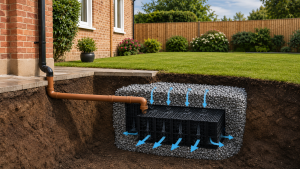
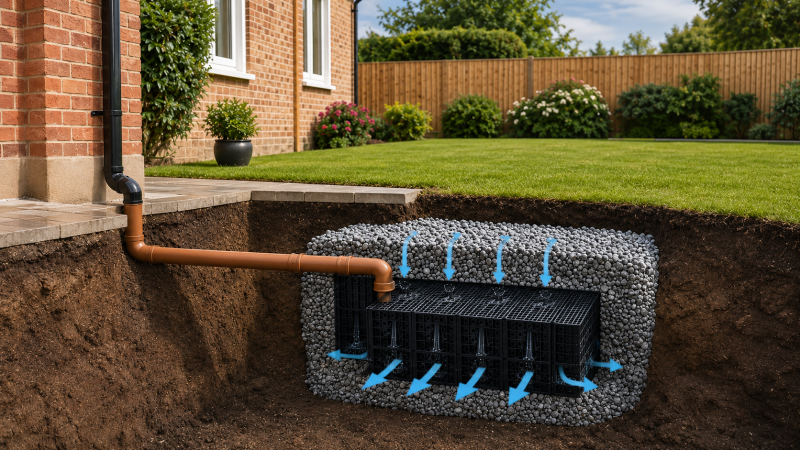
A soakaway installation creates an underground area that can collect surface water and allow it to disperse gradually into the surrounding ground. It is usually used to manage rainwater from roofs, driveways, patios, or other hard surfaces where runoff would otherwise collect in the wrong place.
That matters because repeated surface water problems often happen when too much water reaches one area with nowhere effective to go. A working soakaway helps relieve that pressure by giving the water a controlled place to drain into and disperse over time.
This is why a proper soakaway solutions approach can often make more sense than repeatedly dealing with puddles, soggy ground, or flooded areas after every heavy shower.
When a Property May Need Soakaway Installation
A soakaway installation is usually worth considering when the property has repeat surface water problems and the existing drainage setup is not coping properly.
That often includes situations where:
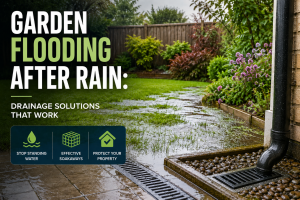
- the same garden area floods after rain
- surface water pools near the house
- downpipes discharge into an area that cannot cope
- patios, paths, or driveways keep holding water
- the current soakaway has failed
- runoff is overwhelming the surrounding ground
In these cases, the issue is not just wet weather. It is the fact that the property lacks an effective route for surface water to disperse.
What Affects Soakaway Installation Cost
Several practical factors influence the final cost.
The size of the soakaway
A larger soakaway usually costs more because it needs more excavation, more materials, and more work to install properly.
The amount of water it needs to manage
A system dealing with light roof runoff is different from one handling broader surface water pressure from larger hardstanding or repeated flooding.
Ground conditions
Some ground drains more easily than others. If the surrounding soil makes dispersal harder, the installation may need more planning or a different approach.
Access to the site
A simple, open garden area is easier to work in than a tight or restricted space. Poor access can add time and complexity to the installation.
Existing drainage issues
If there is an old failed soakaway, blocked surface water route, or wider drainage problem, the cost may reflect the need to deal with that as part of the job.
Reinstatement afterwards
Once the soakaway is installed, the area often needs to be made good again. The final finish and surrounding surfaces can affect the overall job cost.
A Realistic Way to Think About Soakaway Installation Cost
The most useful way to think about soakaway installation cost is not as a single headline figure, but as the price of creating a drainage solution that actually suits the site. A smaller and simpler installation will usually sit at the lower end. A more involved surface water problem with difficult ground, greater runoff, or more preparation work will usually sit higher.
That matters because the cheapest option is not always the best value. If the soakaway is not sized or placed properly, the same flooding problem may keep returning. In drainage, a lower price can cost more in the long run if the system still fails to manage the water properly.
What the Soakaway Installation Process Usually Involves
Although each site is different, the general installation process usually follows the same stages.
Assess the drainage problem
The first step is understanding what the soakaway needs to deal with. That means looking at where the water is coming from, where it is collecting, and how the property is currently handling surface water.
Choose the right location
The soakaway needs to be placed where it can work effectively and where it makes sense in relation to the property layout and drainage flow.
Excavate the area
The ground is opened up to create the space needed for the soakaway installation. The scale of excavation depends on the size and type of system being installed.
Install the soakaway system
The system is put into place so it can collect and disperse the surface water properly. This is the main stage that turns the drainage plan into a working below-ground solution.
Connect the drainage route
Water needs a proper path into the soakaway, whether that comes from downpipes, channels, or other surface water routes.
Reinstate the area
Once the system is installed, the surrounding area is made good so the site is restored as cleanly as possible.
What to Expect During Installation
Most property owners want to know what the work will actually feel like on site. The honest answer is that soakaway installation is practical groundwork. There is usually excavation, movement of materials, and some disruption to the installation area while the work is carried out.
What matters is that the disruption has a purpose. The aim is not just to hide water underground. The aim is to improve how the property handles rainfall so the same flooding, puddling, or soggy-ground problem stops coming back.
That is why the installation process should always be judged by the end result, not just by the temporary mess created while the work is being done.
When Soakaway Installation Is Better Than Another Short-Term Fix
Some properties go through the same cycle for years. Water collects after rain, the surface dries eventually, and the issue gets ignored until the next storm. That usually means the underlying drainage problem is still in place.
A proper installation often makes more sense when:
- the flooding keeps returning
- the same area stays waterlogged every rainy period
- smaller fixes have not changed anything
- surface water is affecting access or use of the property
- the current soakaway is no longer working
In these cases, a properly planned surface water drainage help approach is often more effective than another temporary response.
Why Site Conditions Matter So Much
Two properties can have similar flooding symptoms but very different installation needs. One garden may have straightforward access and a clear runoff pattern. Another may have awkward access, poor drainage ground, or more concentrated water from roofs and paving.
That is why cost and process should always be tied back to the property itself. The real question is not “how much does a soakaway cost?” It is “what does this site need to manage surface water properly?”
Final Thoughts
Soakaway installation cost varies because properties, runoff levels, and drainage conditions vary. A simpler installation in a straightforward setting is very different from a larger job dealing with repeated flooding, poor surface water drainage, or a failed existing system.
The most useful way to think about the cost is not just as groundwork, but as the price of finally giving surface water a proper route away from the problem area. If the same flooding keeps coming back, that is often what makes the installation worth doing.
FAQs
What affects soakaway installation cost?
The cost is usually affected by the size of the soakaway, the amount of surface water involved, the ground conditions, access to the site, and how much preparation or reinstatement is needed.
Is soakaway installation worth it for garden flooding?
It often is when the same area keeps flooding after rain and the current drainage setup is not coping properly.
How does soakaway installation work?
The process usually involves assessing the drainage issue, choosing the right location, excavating the area, installing the soakaway system, connecting the water route, and reinstating the site.
Can a new soakaway solve standing water problems?
Yes, if the standing water is linked to poor surface water drainage and the soakaway is the right solution for the site.
Why does one soakaway installation cost more than another?
Costs vary because different properties need different sizes, layouts, access arrangements, and drainage solutions.