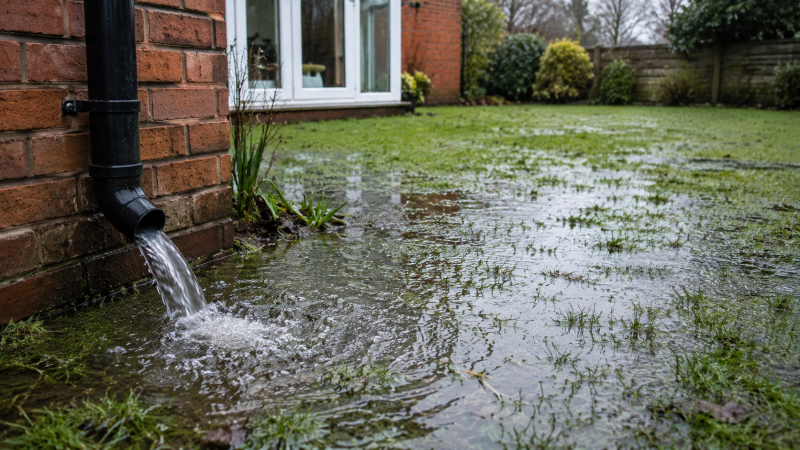
A downpipe soakaway is a drainage solution that takes rainwater from a roof downpipe and directs it into the ground through a soakaway system. Its job is simple: move roof water away from the property in a controlled way so it does not collect around walls, patios, paths, driveways, or garden areas that already struggle in wet weather.
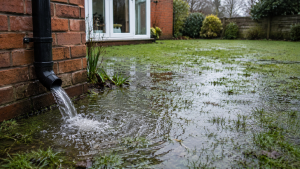
This matters because roof water adds up quickly. During heavy rain, even a normal house roof can send a large volume of water down the drainage line in a short time. If that water has nowhere suitable to go, it often shows up as standing water, overflowing downpipes, soggy ground, or repeat flooding near the property.
This guide explains what a downpipe soakaway is, what it does, when you may need one, and how to tell whether roof runoff is contributing to surface water problems around your home or business.
What Is a Downpipe Soakaway?
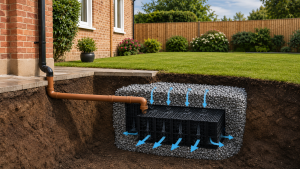
A downpipe soakaway is usually an underground drainage arrangement designed to collect rainwater from a roof downpipe and allow it to disperse gradually into the surrounding ground.
In practical terms, it connects the rainwater coming off the roof to a below-ground drainage point that can handle that runoff more effectively than simply allowing it to spill out near the property.
That makes it different from a general drainage channel or a temporary runoff route. The aim is not just to move the water somewhere else on the surface. The aim is to give it a proper place to drain away.
Why a Downpipe Soakaway Matters
Roof water often causes more drainage pressure than people expect. When rainfall is light, the problem may not be obvious. During heavier weather, though, the same downpipe can keep discharging water into an area that cannot cope properly.
That is when problems tend to show up, including:
- water pooling below the downpipe
- soggy ground close to the house
- splashback and saturation near walls
- standing water on paths or patios
- runoff tracking into the garden
- repeat flooding in the same spot after rain
A downpipe soakaway helps because it takes that concentrated flow and gives it a controlled route into the ground instead of allowing it to build up on the surface.
When You May Need a Downpipe Soakaway
A property may need a downpipe soakaway when roof water is regularly contributing to poor drainage conditions around the building.
Common signs include:
- water collecting at the base of a downpipe
- overflowing runoff near the house after heavy rain
- puddles forming below gutter outlets
- standing water near paths, patios, or driveways
- one part of the garden always becoming waterlogged after rainfall
- repeated wet patches where the downpipe discharges
- signs that the current surface water setup is not coping
The stronger the pattern, the more likely it is that the downpipe discharge is part of the wider drainage problem.
How a Downpipe Soakaway Helps Surface Water Drainage
Surface water drainage works best when runoff is managed before it becomes a repeated problem area. That is exactly where a downpipe soakaway becomes useful.
Instead of allowing roof water to spill directly onto the ground or overload a weak drainage point, the soakaway gives the water a more controlled discharge route. This can help reduce pressure around the property and improve how the site handles rainfall overall.
That is especially useful where:
- the ground near the downpipe stays wet for too long
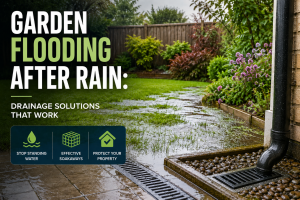
- the garden floods after heavy rain
- patios or paving keep holding water
- the property has poor runoff control in one specific area
In those cases, a proper soakaway solution may be more effective than repeatedly dealing with the symptoms on the surface.
A Downpipe Soakaway vs a General Soakaway
A general soakaway may handle broader surface water from a larger area. A downpipe soakaway is more specifically tied to roof water discharge.
That means the focus is narrower:
- it deals with water coming from the gutter and downpipe
- it is designed around roof runoff rather than whole-site flooding
- it often becomes relevant when the main visible problem sits near the building
The two ideas are related, but the intent is different. A downpipe soakaway is usually part of solving a roof-water drainage issue rather than every type of garden flooding problem.
Signs Your Current Downpipe Drainage Is Not Working Properly
You do not need a formal diagnosis to spot that the current setup may be struggling. In many cases, the warning signs are fairly consistent.
Look out for:
- water gushing out and sitting on the surface
- overflow at the base of the downpipe
- erosion or washout below the discharge point
- mossy, permanently damp patches nearby
- staining or wet marks close to the wall
- runoff spreading across hard surfaces
- drainage problems that get worse in repeated wet weather
These signs do not automatically confirm that a new soakaway is required, but they do suggest the existing route for roof water may not be good enough.
When a Downpipe Soakaway Is More Likely to Be Worth It
A downpipe soakaway often makes more sense when the problem is recurring rather than occasional.
It is more likely to be worth considering when:
- the same downpipe area floods again and again
- surface water collects close to the property
- smaller fixes have not changed anything
- the site layout pushes runoff into one weak area
- rainwater is clearly contributing to garden or patio flooding
- the property needs a longer-term surface water drainage solution
That is usually the point where a proper drainage fix starts making more sense than another short-term workaround.
Can a Downpipe Soakaway Solve Garden Flooding?
Sometimes yes, but not always on its own.
If roof runoff is one of the main reasons the garden or a nearby area keeps flooding, a downpipe soakaway can make a real difference. If the garden flooding is caused by a bigger site-wide issue, poor levels, or wider surface water problems, the soakaway may only be one part of the solution.
That is why the cause matters. A downpipe soakaway is most effective when roof water is a meaningful part of the drainage pressure.
Where wider flooding is involved, it can help to review the broader surface water drainage issue rather than treating every wet patch as the same problem.
What Affects Whether a Downpipe Soakaway Is Suitable?
Not every property will need the same drainage answer. Whether a downpipe soakaway is suitable depends on things such as:
- the amount of roof water involved
- where the water currently discharges
- the available space around the property
- how the site handles surface water now
- the wider drainage layout
- the condition of the surrounding ground
This is why a proper recommendation should be based on the property and runoff pattern rather than on a one-size-fits-all assumption.
When Roof Water Problems Need More Than a Quick Fix
Some properties go through the same cycle every time the weather turns wet. The downpipe overflows, the ground below becomes saturated, and the same puddles reappear. Then everything dries out just enough to be ignored until it happens again.
That usually points to a drainage arrangement that is not coping properly.
In these cases, repeated surface fixes are often less useful than addressing the actual runoff route. If roof water is overwhelming the same area every time, the property may need a better-managed drainage solution rather than another temporary patch.
Clear Advice Matters
A downpipe soakaway is not something that should be added blindly. The best result comes from understanding whether the roof water is really the cause of the issue and whether the site needs a soakaway, a repair to an existing setup, or a broader surface water drainage approach.
That is why the right advice matters. It helps avoid spending money on a drainage fix that does not match the problem properly.
Final Thoughts
A downpipe soakaway helps solve a very specific drainage problem: roof water that keeps discharging into an area that cannot cope properly. When that happens, the result is often repeat puddling, soggy ground, standing water, and pressure around the property in wet weather.
The key is recognising whether the downpipe is part of the problem. If it is, a better roof-water drainage route can make a noticeable difference and help reduce the same surface water issue from coming back every time it rains.
FAQs
What is a downpipe soakaway?
A downpipe soakaway is an underground drainage solution that takes rainwater from a roof downpipe and allows it to disperse gradually into the surrounding ground.
When do I need a downpipe soakaway?
You may need one if water keeps collecting below a downpipe, the ground near the house stays wet, or roof runoff is contributing to repeat flooding or standing water.
Can a downpipe soakaway stop garden flooding?
It can help if roof water is one of the main causes of the flooding. If the problem is wider than the downpipe area, it may need to form part of a broader drainage solution.
What are the signs of poor downpipe drainage?
Common signs include water pooling at the base of the downpipe, soggy ground, runoff across paths or patios, and repeated wet patches after heavy rain.
Is a downpipe soakaway the same as a general soakaway?
Not exactly. A downpipe soakaway is specifically designed to manage roof water from a downpipe, while a general soakaway may deal with broader surface water drainage.