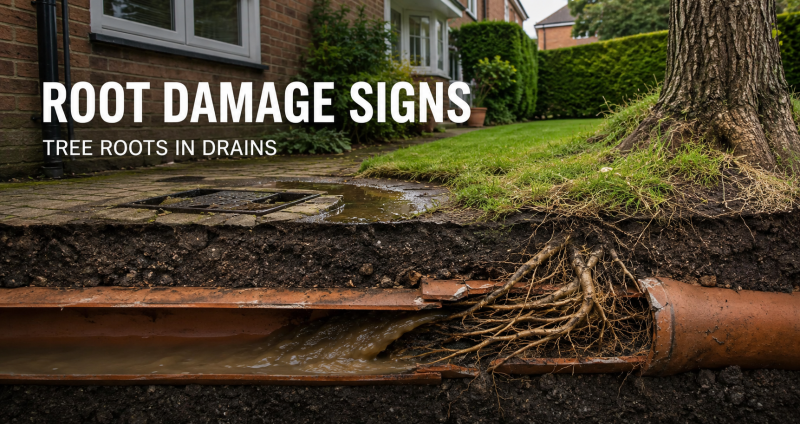
Tree root drain damage signs often start small. At first, the issue may look like an ordinary blockage. Water drains slowly, bad smells come and go, or an outside drain fills up now and then. Over time, the same symptoms return more often, and the pattern becomes harder to ignore. That is usually when people realise the problem may be more than surface debris or a one-off blockage.
The difficulty is that root-related drain problems do not always show themselves clearly from the start. Roots often enter through an existing weak point in the pipe. As they grow, they trap waste, restrict flow, and place more pressure on the damaged section. That means the warning signs can look like a blockage at first, then gradually shift into something more structural.
This guide explains the clearest tree root drain damage signs, how to tell the difference between root damage and an ordinary blockage, and when it makes sense to arrange a CCTV drain survey.
Why Root Damage Signs Are Easy to Miss
The first signs of root damage are often mild. A sink may drain a little more slowly than usual. An outside drain may smell bad after rain. A toilet may gurgle now and then. None of those signs automatically confirm root ingress on their own.
The problem is the pattern. Root-related drainage faults tend to come back. They also tend to affect the same part of the system repeatedly. That is why the early warning signs matter. You are not just looking at what happens once. You are looking at what keeps happening.
The Most Common Root Damage Signs
Repeated blockages in the same area
This is one of the clearest tree root drain damage signs. If the same drain keeps blocking again and again, there is often a reason behind it. Roots inside the line create a catch point where waste builds up repeatedly. A simple blockage may clear fully. A root-related blockage often returns.
Slow drainage that keeps coming back
A drain that slows once may not mean much. A drain that slows every few weeks, especially after it has already been cleared, is more concerning. Root ingress often narrows the flow path gradually, which makes repeated slow drainage a common sign.
Bad smells that return after cleaning
Foul smells near sinks, toilets, or outside drains can happen for several reasons. However, if the smell keeps returning after surface cleaning or clearing work, there may be a deeper problem in the drain. Roots can trap waste inside the pipe, and that trapped waste often causes recurring odours.
Gurgling sounds from fixtures
Air and water struggle to move freely through a restricted drain. That often leads to bubbling or gurgling sounds in sinks, toilets, and other nearby fixtures. It is not a root-only symptom, but when it keeps returning with other warning signs, it becomes more meaningful.
Outside drains filling or overflowing
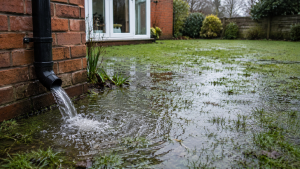
An outside drain that fills during normal use can point to a restriction further down the line. If the same outside drain keeps backing up, especially after earlier clearing work, root ingress becomes more likely. This is one of the signs that often points to more than surface debris.
Water backing up after previous clearing
This is another strong clue. If the drain improves briefly and then the same issue returns, the cause may still be inside the pipe. Roots often cause exactly this pattern because clearing work removes the immediate blockage but not the structural weakness that allowed the roots in.
How Root Damage Signs Differ From a Standard Blockage
A standard blockage often has a simpler pattern. One outlet slows down, the drain is cleared, and the problem stays away. Root-related drainage issues usually behave differently.
You are more likely to suspect root damage when:
- the same blockage keeps returning
- symptoms affect the same run repeatedly
- bad smells and slow drainage come back together
- the outside drain reacts during normal indoor use
- clearing work only helps for a short time
- there are signs the pipe may have a structural weakness
That pattern matters more than any one symptom on its own.
Structural Root Damage Signs to Watch For
Some root-related problems go beyond repeated blockage and start suggesting damage to the drain itself.
These signs can include:
- repeated overflow from the same outside drain
- worsening flow problems over time
- foul water collecting in the same area
- visible sinking or movement in the ground near the drain line
- signs that the system has become more unstable after previous blockage issues
These are the situations where the problem may no longer be just roots inside the line. The pipe itself may now need drain repair options after the roots are dealt with.
When Root Damage Signs Point to CCTV Inspection
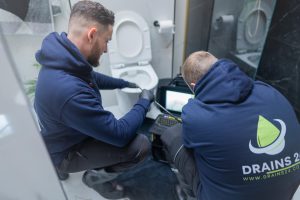
A CCTV drain survey becomes important when the symptoms suggest more than a simple blockage. The inspection helps confirm whether roots are actually present, where they entered, how much of the line is affected, and whether the pipe has cracks, open joints, or other defects.
This matters because the next step depends on the real condition of the drain. One line may only need root removal from drains and a localised repair. Another may have wider structural damage that needs a more involved solution.
When to Call a Professional
It usually makes sense to call a professional when the warning signs keep repeating or the drain starts showing more serious symptoms.
That includes cases where:
- the same drain blocks repeatedly
- outside drains keep overflowing
- bad smells return soon after clearing
- several symptoms appear together
- the problem keeps coming back after short-term fixes
- you suspect the drain may now be damaged as well as blocked
At that stage, proper diagnosis is often more useful than another quick attempt to clear the line.
Why Early Action Matters
The longer root-related drain damage is left untreated, the more chance there is of the pipe weakening further. Roots do not just obstruct flow. Over time, they can widen weak points, increase internal strain, and make a small defect more serious.
That is why early action often saves time and money. If you confirm the problem sooner, you have a better chance of dealing with it before the drain needs more extensive repair.
London-Relevant Outbound Link Opportunity
To support the point that roots usually exploit existing weaknesses rather than forcing their way into sound drains, you can use this external reference:
Tree roots usually exploit existing weaknesses in older or damaged pipework, rather than breaking into sound drains at random, as explained in this tree root and drain guidance.
Local and Network Linking Opportunity
This post supports the root removal topic from a different angle to the previous one. It works well as a main-site diagnostic post that can link down into local articles on repeat blockages, overflow, CCTV inspections, and repair work where relevant. That keeps it aligned with your campaign structure.
Use only real local posts that genuinely support:
- repeat drainage symptoms
- root ingress diagnosis
- CCTV drain surveys
- drain repairs after damage
- outside drain overflow
Final Thoughts
The clearest tree root drain damage signs are usually not dramatic at first. They show up as repeat symptoms: the same blockage, the same smell, the same outside drain filling again after it seemed better. That pattern is what matters most.
The goal is not just to clear the line again. It is to work out whether roots are inside the drain, whether they have entered through a defect, and whether the pipe now needs repair as well as clearance. In many cases, a proper inspection is the step that turns a repeating nuisance into a clear plan.
FAQs
What are the first signs of tree root damage in drains?
The first signs often include repeated blockages, slow drainage that keeps returning, bad smells, gurgling sounds, and outside drains filling or backing up.
Do tree roots always cause a full blockage?
Not at first. Roots often begin by restricting flow and trapping waste, which leads to recurring drainage problems before a full blockage develops.
Can tree root drain damage look like a normal blockage?
Yes. Root ingress often starts with the same symptoms as an ordinary blockage, which is why repeat patterns are so important.
When should I get a CCTV drain survey for suspected root damage?
A CCTV drain survey is useful when the same symptoms keep returning, outside drains overflow, or there are signs the pipe may be damaged as well as blocked.
Does root damage always mean the drain needs repair?
Not always, but roots often point to an existing weakness in the pipe. After clearance, the drain may still need repair to reduce the risk of the problem returning.